Monday, 12 December 2016

The Name


The Name


With the name of our opening we wanted to keep it simple and short. It is not completely clear what is going on in our opening so we thought we could either choose a name that hinted at what was to come or we could name it after our main character.

Creating a name that hinted at what was to come meant we had to create the rest of our story. We came up with the concept of the girl being abused by her father. She tries to hide it in her 'normal' life which are the 360 pans but it cannot be stopped which is the 'weird' shots jumping through. In the end she end up snapping and possibly killing her father which leads her to be in a hospital. So we went with that concept and came up with some test names including; 'Abuse', 'Reckless' and 'Agression'. However, they all sounded too cliche and immature so we went in another direction.

We then thought about using the name of our protagonist. We wanted a short name that wasn't complicated. We started with names like 'Lucy' and 'Alice'. We then came to the the decision of the name 'Rose'. We thought it could hint at what to come by showing that the girl looks innocent, but she has thorns and there is a dangerous side to her.

Wednesday, 7 December 2016

The Vision


The Vision


Sound Palette:

Included in the video:
  • muffled diegetic sound
  • ringing
  • man shouting
  • gasping
  • water splash


Colour Palette:

It is a dark and murky colour palette as the off-colours match the off-tone of the film. 

The dark grey is for the dirty bath water that the main character will sink into when the title appears on the screen.

The brown is for the girl's hair colour, this is important because it matches the dark tone of the film.

Green was used to contrast the dark scenes with a brighter colour, however, we did not want this to be too bright as it would affect the tone of the opening.

The dirty yellow will be the colour of her eyes, as it stands out from the other colours and appears unnatural.

The hospital blue a very dominant colour within the opening, as it makes the hospital scene more realistic and clinical.


Nine Frames:

When it comes to the nine frames, the focus of a majority of them is the main character with several examples of close-ups of her face.

They demonstrate the intertwining of the normal clips amongst the unsettling ones.

The credits that are incorporated into the opening are not going to be the focus of it.
.Negative space will be utilised to put them into the opening sequence.

Credits will be as unobtrusive as possible, using a minimal font that isn't too big.


Tuesday, 6 December 2016

Audience Expectations


Audience Expectations

"What would you expect from a drama/thriller film?"

Harriet Dowling (22)  - "I would expect a drama/thriller to be intense and emotional as it would deal   with quite deep and dark issues. This may make you feel uncomfortable but you would have a need to keep watching."


Jamie Brennan (19) - "I think that kind of film would be fast paced with something always happening. Lots of twists and cliffhangers."


Nicole Daniels (27) - "A drama thriller would seem more realistic for the audience as I would expect it to be about realistic things that normal people could possibly face like abuse or illness. It would be more raw and definitely not glamourised."


Max Logger (17) - "I would expect a drama/thriller to look dark and cold as it wouldn't be about a happy subject."

Representation Of Women In Film

Representation of Women in Film


As our film opening features a female protagonist, we thought it was important to research how women are presented in Hollywood films and if they were regressive or progressive protrayals.


Statistics of Women in Film


Females comprised 29% of all clearly identifiable sole protagonists featured in the 100 top grossing films of 2016. This represents an increase of 7 percentage points from 2015, and a recent historical high. Males comprised 54% of protagonists, and 17% were ensembles.

Female protagonists were most likely to appear in comedies (28%), followed by dramas (24%), horror films (17%), animated features (14%), science fiction films (14%), and action films (3%).

In contrast, male protagonists were most likely to appear in dramas (30%) and action features (30%), followed by comedies (17%), animated films (13%), and science fiction features (10%).

Females comprised 32% of all speaking characters (major and minor) in 2016. This represents a decrease of 1 percentage point from 33% in 2015. Males accounted for 68% of speaking characters. Overall, audiences were more than twice as likely to see male characters as female characters.

In 2016, 76% of all female characters were White, 14% were Black, 6% were Asian, 3% were Latina, and 1% were other. 77% of all male characters were White, 14% were Black, 4% were Asian, 3% were Latino, and 3% were other.

In films with at least one woman director and/or writer, females comprised 57% of protagonists. In films with exclusively male directors and/or writers, females accounted for 18% of protagonists.


The Male Gaze


The male gaze is the way in which the visual arts and literature depict the world and women from a masculine point of view, presenting women as objects of male pleasure. The phrase male gaze was coined by feminist film critic Laura Mulvey in 1975.

Mulvey states that in film women are typically the objects, rather than the possessors, of gaze because the control of the camera (and thus the gaze) comes from factors such as the as the assumption of heterosexual men as the default target audience for most film genres. While this was more true in the time it was written, when Hollywood protagonists were overwhelmingly male, the base concept of men as watchers and women as watched still applies today, despite the growing number of movies targeted toward women and that feature female protagonists.

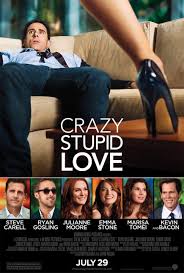
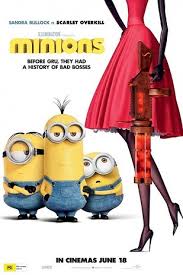
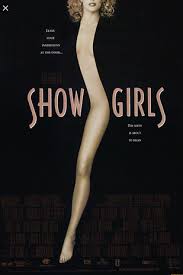
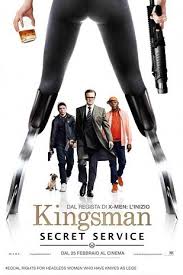
A form of the male gaze is even present in movie posters:
Image result for sexism in movie postersImage result for sexism in movie posters


Image result for sexism in movie postersImage result for sexism in movie posters


Many women in movie posters are depicted as headless- or faceless- beings.

Comedian and writer Marcia Belsky started up a project on Tumblr called The Headless Women Project in which she invites users to send movie posters depicting female bodies without a head.


"The Headless Women project seeks to bring attention to the still standard practise of fragmenting, fetishizing and dehumanising the images of women we see in film, TV, book covers, and advertisement."               

  "By decapitating the woman, she becomes an unquestionably passive object to the male gaze."                                                                                                                                             

  "The question of her consent is removed completely alongside her head, and her purpose becomes solely that of being looked at by men obediently."

Stereotypes of Women in Film 


Just like Paul Hunt's disability stereotypes, there are many stereotypes of women that are being shown in film repeatedly. These include:

Catty- One woman cannot be friends or work with another woman without being jealous and saying spiteful comments (especially over a man).

Maternal- All women want to do is have babies and a big family. Many woman are shown without a clear occupation whilst the men go and work in important jobs.

Stupid- Women cannot be intelligent and good looking. Most women are portrayed as less intelligent and easily confused who need men to come and solve their problems.

Weak- Women are the inferior sex when it comes to strength so obviously cannot defend themselves. They need  a man to come and rescue them.

Portrayals of women are becoming more progressive. When women are made lead characters they are normally presented as strong and independent with less being focused on their family life and more on their job e.g. Arrival, Rogue One, The Hunger Games. Many successful films also have all female casts e.g. The Help, Pitch Perfect, Hidden Figures.

My group having a female lead in our opening is a big deal which means we will need to be careful not to conform to stereotypes which would make it a regressive piece.


Monday, 5 December 2016

Directors

Directors Of The Drama-Thriller Genre


Alfred Hitchcock


Image result for alfred hitchcockSir Alfred Joseph Hitchcock KBE was an English film director and producer, at times referred to as "The Master of Suspense". He pioneered many elements of the suspense and psychological thriller genres. Some of his best-known films include; Psycho (1960), Vertigo (1958) and North By Northwest (1959).In order to create suspense in his films, he would alternate between different shots to extend cinematic time(the crop-duster sequence in North By Northwest (1959), the shower scene in Psycho (1960)). His driving sequences were also shot in this particular way. They would typically alternate between the character's point of view while driving and a close-up shot of those inside the car from the opposite direction. This technique kept the viewer 'inside' the car and made any danger more richly felt.In a lot of films, he used to create more shadows on the walls to create suspense and tension ( the glowing milk scene in Suspicion (1941) or the ominous shadow during the opening credits to Saboteur (1942)).


Stanley Kubrick


Image result for stanley kubrickStanley Kubrick was an American film director, screenwriter, producer, cinematographer, editor, and photographer. He is frequently cited as one of the greatest and most influential directors in cinematic history. The Shining (1980), A Clockwork Orange (1971) and 2001: A Space Odyssey (1968) are some of his most famous works. One of his signature shots was "The Glare". A character's emotional breakdown is depicted by a close-up shot of the actor with their head tilted down, but with their eyes looking up usually directly into the camera. Examples include the opening shot of Alex in A Clockwork Orange (1971), Jack slowly losing his mind in The Shining (1980), Pyle going mad in Full Metal Jacket (1987). Kubrick also often uses contrapuntal music to work against the on-screen images to create a sense of irony. In Dr Strangelove (1964), images of nuclear holocaust are accompanied by the song "We'll Meet Again" and in the final scene of Full Metal Jacket (1987) the marines sing the theme to "The Mickey Mouse Club".


Christopher Nolan


Image result for christopher nolanChristopher Nolan is an English-American film director, screenwriter, producer, cinematographer and editor. He is one of the highest-grossing directors in history, and among the most successful and acclaimed filmmakers of the 21st century. Some of his best-known films include; The Dark Knight Trilogy (2005-12), Inception (2010) and Memento (2000). What Nolan is probably best known for is that he doesn’t tell his stories linearly (with scenes in chronological order). He makes extensive use of flashbacks and flashforwards to add additional depth and explanation. As such, a common theme is having multiple story threads that link together. For example in Memento (2000) the opening sequence is the last scene played backwards, in The Prestige (2006), the first scene in the film is also the last one. Nolan also frequently uses crosscutting in his films. He crosscuts parallel scenes of action increase tension and build to a climax. Examples of some of his films that include crosscutting are Inception (2010) and The Dark Knight (2008).


Thursday, 1 December 2016

Drama-Thriller Iconography


Drama-Thriller Iconography

As our film opening is part of the drama/thriller genre it is important for us to look into specific details of what makes part of this genre. Some drama/thriller iconography include:


Low-Key Lighting

Image result for low key lighting film
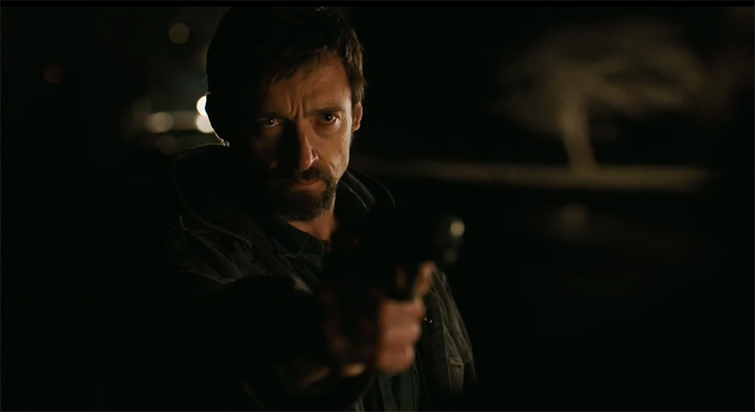
In thrillers, low-key lighting is used mainly to depict a sense of danger and uncertainty as well as making a setting look more unsettling and disturbing for the audience. As well as this, a lot of films use low-key lighting where it only shows one side of a characters face. This is usually used to make the audience feel disturbed by the character but it can also hint to the audience that there is something hidden about the character and that there is more to them than what meets the eye.


Image result for 127 hours

Confined Spaces/Claustrophobia

In thriller films, confined spaces are used a lot to scare the audience and also to give the idea of insecurity to an audience member which should make them feel very uncomfortable when watching the film. This is because any phobia ia aimed to tackle an audience member's insecurity of something they dread.


Image result for alfred hitchcock glowing milkShadows

Shadows are frequently used and whilst they link closely to low-key lighting, they can also depict a sense of danger and peril to the story. As a result of this, the audience can feel very scared when they see one as they can try to anticipate what will happen next.


Reality

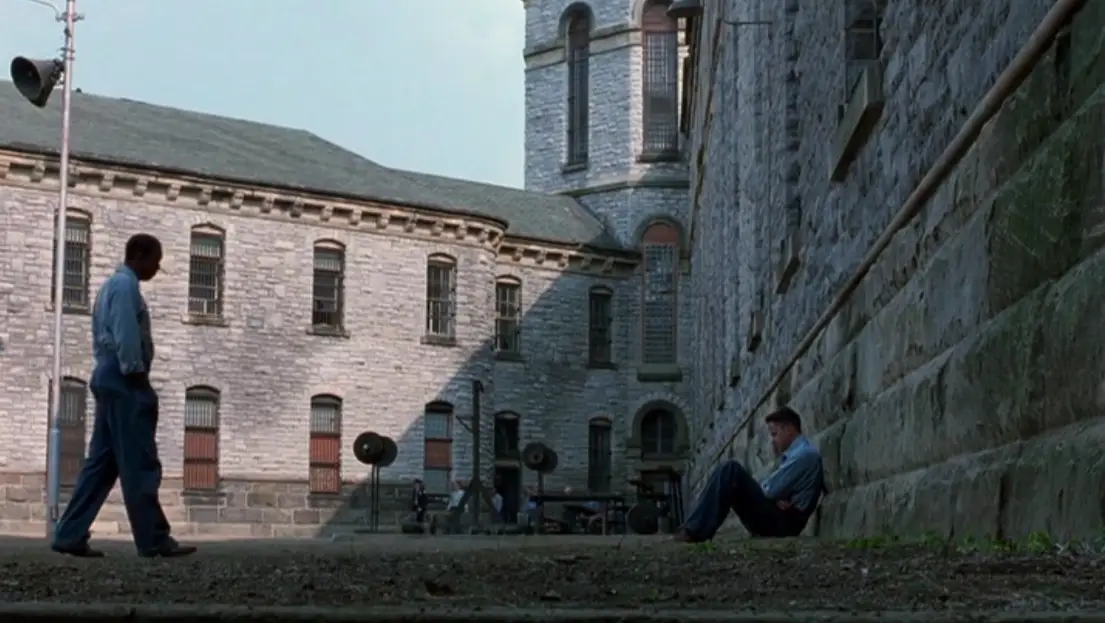
Image result for shawshank redemption prisonReality is a big piece of iconography in a drama genre, the audience have to be able to relate to the situation or be able to put themselves in that situation. This then allows for the audience to have a closer connection to the characters and start to feel things like sympathy for certain people. As a result of this, films have to be able to put reality into their films otherwise the audience will not relate to the film.


Wednesday, 30 November 2016

Media Text Examples


Media Text Examples Similar To Our Opening


As we have created the final idea to our opening we decided to look at other media products that have similar pieces to ours to get some more ideas and to see how other people used ideas like ours.


For the majority of the opening we have decided to circle around our main character, using a mid shot,  in different locations. In editing we will then match up the shots so it looks continuous. It will be similarly matched up like the changing seasons scene in 'Notting Hill' so it looks like one big scene instead of multiple little clips. This will allow mystery as it does not reveal to the audience anything about why the girl is in any of theses places. It will also allow for a fast pace as she keeps changing location.


The camera will rotate around our protagonist similar to the way it does in this clip from 'Moonlight'. The rotations disorientate the audience and can represent a sense of confusion that the character is feeling. It could be a good way of representing how she sees the world and hint at her mental illness. We will need to work out how we will move the camera in a circle. We will also need to work out a speed to move around our actress as if it is too fast the action may become blurry and difficult to watch and if it is too slow it may bore the viewer.


The last scene of our opening will be the protagonist with a doctor in an office or hospital room. This implies something big has happened for the opening to finish this way. This hints that the rest of the film will be about what happened. The scene could be similar to this scene from 'The Last Exorcism Part II' where the doctor is talking to the woman .We could use a similar layout or make it into more of a hospital scene and out the girl on a hospital bed.


As the camera rotates around the lead, the protagonist will just stare forward. They will have a blank expression and look just beyond the camera like the man in this scene from 'Psycho'. Our lead will not show any expression to keep the audience from knowing what the protagonist is feeling and thinking. This will help keep the sense of mystery in the opening as not much information is given away.


Overall, the concept of our opening is similar to the introduction in this Maroon 5 video. A seemingly 'normal' everyday shot is intertwined with 'weird' clips that creates a sense of confusion. It implies that everything is not as it seems and suggests that something big will happen.


Sunday, 27 November 2016

Representation Of Mental Illness In Film


Representation of Mental Illness in Film

Our idea for our film opening is to include a girl who is portrayed to have gone 'crazy'. This is due to her having a mental illness. To create this portrayal we do not want it to be cliched or inappropriate/offensive in anyway. To do this we need to research different representations of mental illness in other media texts.

Old Representations of Mental Illness:


Most of the older representations of mental illness like in 'One Flew Over The Cuckoo's Nest' and 'Girl Interrupted' are regressive portrayals. They are set in psychiatric wards and kept away from the outside. They are not recognized as having a mental illness but are referred to as 'crazy' and 'insane'. 

The characters portrayed can be similar in character due to the fact that they all seem to have hints of bipolar disorder even if they do not have the illness. Many suddenly lash out and shout and become violent, sometimes for no real reason. This old fashioned portrayal is meant to show people with mental illness as almost outcasts of society. They are locked away in the psychiatric ward and don't even seem to be getting help or proper medication to make them better.


New Representations of Mental Illness:


Modern representations of mental illness like in 'Black Swan' and 'Silver Linings Playbook' are progressive portrayals and are normally set in everyday life not even mentioning psychiatric wards. Mental Illness in movies is normally only kept to a minimum amount of people and sometimes they don't even realise they have and illness or are reluctant to except it.


 People who have mental illnesses are not kept away from society and the rest of the world. They are also seen as more 'normal'. However, there is still a stigma behind mental illness which means people to get treated with more caution and are not represented equally.


Our Representation of Mental Illness:

Our portrayal is set in modern times so it may be better if our portrayal was progressive. This means no straight jackets or mental institutions. We could just have the girl in handcuffs and being questioned or in police holding to show she has done something serious instead of dramatising mental illnesses.

If something like a straight jacket is really wanted then we would probably have to set the opening in older times. This would mean we would need to closely control mise en scene which may make it more difficult.

However, we are challenging stereotypes and general norms used in film. It is not normally a young school girl represented in films with mental illness, especially not with the severity or our portrayal.


Saturday, 26 November 2016

The Final Idea


The Final Idea

As a group we have come up with the final concept for our film opening. It is a different idea from our two original pitches but we have brought in elements from both.

The opening follows a teenage girl throughout here normal day. This will include shots of her with her friends, at her house, at the park, etc. We will film her in these different locations using a mid shot. As she is being filmed the camera will pan around her 360 degrees keeping at the mid shot level. The scenes will change and her location will change but the camera will continue to move around her. The girl will not be making any movements or hold any interactions with the people around her, she will just stare directly into the camera. 

As she is being circled there will be quick scenes of 'weird' shots suddenly appearing but it will then return to her 'normal' day. These weird scenes will include her running away, someone shouting at her, her being grabbed, etc. As the opening moves on more of these 'weird' scenes will be added along with the 'normal' scenes. The tempo will speed up and it will become almost like a montage. As the pace increases and non-diegetic ringing sound will appear in the background and increase in volume as it speeds up. All of the other sound in the opening will be natural and diegetic. We will try and muffle it slightly so it is not over bearing and also to add a hint of confusion and chaos. 


Once this fast montage has reached its peak it will quickly change to a shot of the girl's eyes. The camera will slowly zoom outwards into a long shot. As you can see more of the girl and her surroundings, it is revealed that she is in a doctors office/hospital. She will be wearing a hospital gown and she will look tatty and tired. A doctor will be sitting near her repeating her name, trying to gain her attention. The last thing that will happen is the girl will finally realise her name is being called and she will turn towards the doctor. It will then cut to a black screen.

Our credits will be integrated throughout using the natural negative space available.

Friday, 25 November 2016

Initial Ideas

Initial Ideas


Before we came up with our final idea for our film opening we came together as a group and created two initial ideas which we then presented to the class to gain feedback. As a group we all immediately decided on doing an opening in the style of a thriller. One of the openings was the protagonist being abducted and the other was the protagonist stalking someone around.

Idea 1:

Rough Storyboard of Idea 1

The idea was about following a teenage girl throughout her day until she is abducted. This would be done in a montage style. It would start off with the girl being in the dark boot of a car (having just been abducted) not much will be able to be seen but the audience can hear her breathing. The scene will quickly change to her during her day before she is taken. These shots will include being with friends, at school, with her family, etc. Throughout this montage of the girl's daily life there will be flashes of her in the the dark boot. This is where the credits will be held as not much is featured in this scene. As the opening carries on the montage will speed up with more frequent shots of the boot. We were also thinking of adding her breathing in the 'normal' shots to intensify what is going on. The final scene would actually show her being abducted and then it would end.

The problems with this idea is that it includes many different locations for example, a school. This would mean we would need to get many actors which means we may be vulnerable to bad acting. We may also have problems with continuity errors as there are so many people in different places, Furthermore, this idea runs a high risk of becoming a cliche of other thriller films which could make it boring.


Idea 2:

The main idea for this film opening is the main character being followed by someone or something. This stalker will be the camera as it will be shot in a point of view style. This stalker scenario will be immediately recognised due to the first being watching the protagonist through a window. The character will just be doing normal activities for example reading or sitting at a table. The main character will then move but the shot will continue in one movement from the outside as they walk from wherever they were situated to the front door and out of it, whilst the camera remains outside watching them. As the protagonist walks across the front of the house the shot will then switch to the camera being situated in a bush but still following the character. Location will then be changed to a train station and the character walking onto the platform. The camera will be placed on the opposite platform to make it look more distant. Some non-diegetic music will begin to play but only quietly. Another key character could be introduced here by having the protagonist quickly bump into them. A train will go by and the character would have disappeared. There will then be the sound of a car door closing. A taxi (or just a normal car) will then drive off as the camera moves back from it. The audience will be able to see the character in the car squinting out of the window towards the camera suggesting that they have noticed something. The car could then turn and start driving towards the camera as if it is trying to run it over. The camera will then do a whip pan backwards as the car is about to hit it. It will then cut to a ‘flashback’ of the scene in the driveway, but from the character’s perspective as they look around after hearing the rustling of the leaves. The camera will then whip pan again but downwards this time and back into the road where the car was about to drive into the camera, but the camera is now behind the car, watching it screech as it comes to a standstill. The credits will be integrated throughout the opening for example, when the train goes by the film title will be revealed.

The problem with this idea is that it has a complicated concept. We will need to carefully plan this to make sure other people like our actors can understand what they are doing. It also has many locations that are in public places. This is bad as we may have problems with continuity errors as there are so many people in different places. Furthermore we would need to change the location of the train station as we can not film there.


Monday, 21 November 2016

BFI Trip


BFI Trip


In November we got the chance to attend a AS media workshop on film openings. We learnt about macro and micro conventions of film openings and we the had a Q&A with director Dexter Fletcher (Wild Bill, Sunshine on Leith and Eddie the Eagle).

Macro Convention Task- We watched the openings to Napoleon Dynamite, Casino Royale and The Wedding Singer. We were looking specifically at the genre conventions, narrative, character, themes and atmosphere. I found out that many films have little or no narrative is included in their openings. However, character is an important aspect of the introduction. Themes of the movie are also hinted throughout.

Mirco Convention Task- We had snapshots of some opening title sequences to four different films; My Best Friends Wedding, Raging Bull, Oceans Eleven and Seven. We noted the colour, lighting, font, framing, costume, props and setting of all of these films. I found that all of the film openings were consistent with these elements and it created a specific feel to the piece.


We were also spoken through the curriculum of our coursework and were showed some good and bad examples to take note and also get ideas from. I learnt a lot from this trip to incorporate to our final opening sequence.

We were given some top tips:
  • Control your space
  • Limit your colour palette
  • Use lighting to set mood and create atmosphere
  • Be consistent with your lighting
  • Choose 1 or 2 fonts maximum for the credits
  • Keep a consistency of size, colours, transitions and spacing also for the credits
  • Don't make the font too big

Saturday, 12 November 2016

Preliminary Task


Preliminary Task

The Storyboard


We started off our preliminary  task by brainstorming an idea and then creating a storyboard. We put as much detail in our storyboard as we could including the action, sound, camera shot, editing and duration of the shot. Overall our storyboard contained 12 frames.

One problem that occurred while creating the storyboard was drawing what could actually fit in our shot. we did not always draw the shot from the camera angle that we were actually going to use. This turned some long shots into aerial shots. We have learnt that it is good to actually go to the location and map out what would fit in the shot rather then guess.

Furthermore, The duration of our shots specified on the storyboard are not precise as we were not sure how long it would take, especially if we were to edit parts out later. To be more precise in the future we will actually do a quick run through of the action so we get a better understanding of how long it would take for people to move etc.

Filming:

Filming of our preliminary task was very successful for our group. We kept it simple with just Cassidy and I acting in it to not make it too complicated. We all understood what was to be done and created shots very shots very similar to the ones on our storyboard. As we were all working together we were able to complete all of the filming in around an hour. Everybody had a say in the filming and contributed on the levels and angles on the shots.

We were able to shoot most of our scenes in chronological order due to the scenes all being in the same location but different locations. This made us rely a lot less on our storyboard when it came to editing as there was no need to move many shots around. We are aware that shooting in chronological is highly unlikely to happen in our real piece and may even hold us back if we try to do it that way.

Our biggest difficulty whilst filming our preliminary task was the shots that moved along with the close up of the feet and the face. We did not have a camera dolly to get the camera to move smoothly. In the end we just held the camera manly. Although the camera work in these shots are not as could as they could have been, I believe they do not take away from the rest of the film.

Editing;

Editing came quite easy for our group as it became a case of just placing the clips in order and making sure they matched up precisely. During filming we paid close attention to not create any continuity errors so it made editing easier and we just had to cut parts of the clips that were too long. The hardest part pf editing was the match on action shot as Cassidy moves from the corridor into the classroom as we had to make sure she was in the exact same position in all of the shots. 

There was no dialogue in the video which made editing more simple as sound was minimal. We added non-diegetic music to the confrontation scene to add more tension and make it more dramatic. Finally, we added some effects to the video to make it seem more comically dramatic as the ending is a strange stare off.

End Result


Film Openings Research


Film Openings Research 


In one of our recent media lessons we watched three film openings; Trainspotting, Halloween and Amelie. We explored what features were included in different types of genres so we could gain a better understanding of what to include in our own piece. I created visual maps showing the types of sound, tension levels, camera work, mise-en-scene and editing used in the openings. 

Trainspotting:

Genre: Drama/Crime
Director: Danny Boyle
Notes: The scenes starts off with an establishing shot which sets the location of the film. This is immediately interrupted by the main characters running into the shot which creates tension and a fast pace in the film which draws in the audience. The whole of the opening is edited with cross cuts as the scenes switch from one another with the voice over of Ewan McGregor's character. This fast montage gives the viewer an inside look of other characters and themes that will feature throughout the movie. As a result of the cross cutting, tension levels throughout the clip stay quite moderate and the sound does not get very loud. Most of the sound is diegetic as the scenes are normal settings. However, there is music played throughout the opening which modernises the clip and relates back to the urban setting.


Amelie:

Genre: Drama/Romance
Director: Jean-Pierre Jeunet

Notes: The film starts off with classic opening credits with gold writing and a black background. The opening then changes to an establishing shot  of an empty french street which sets the location of the film. Different clips of settings are then shown followed by the introduction of a man with a voice over in French. Subtle non-diegetic music is played throughout the whole clip. The opening then changes to stop frame animation of a pregnant women throughout her pregnancy and Amelie is born. The final scenes in the opening are of a child playing and doing things like spinning coins and making faces. The whole of the opening lacks tension due to it being a calm romance. However, the concept of a romantic theme is carried throughout due to the colour palette being very neutral with green and yellow.


Halloween:

Genre: Slasher/Thriller
Director: John Carpenter

Notes: Just like the other two movies, Halloween starts off with a establishing shot of a house. A pumpkin is visible to definitely get across to the audience that is Halloween. The shots of this opening are interesting as it is all filmed from the point of view of the killer except from the last shot when the killer is revealed. This intrigues the audience as they find out a lot of information at the very start which other characters don't. Along it all being filmed from a p.o.v, the opening is all a continuous shot. This creates more suspense for the audience as there are no breaks between the shots so they see everything. Unlike the other movies, Halloween is full of suspense and this heightened with the use of sound. Diegetic sound like talking and footsteps is added to show it is a normal situation. However, is is the non-diegetic dound of added music that creates the susoense with sharp noises added in. Darkly lit shots is also a key component in this film to create suspense. The dim lighting stops the audience from seeing everything clearly so they are not fully clear on what is going on.