Monday, 12 December 2016

The Name


The Name


With the name of our opening we wanted to keep it simple and short. It is not completely clear what is going on in our opening so we thought we could either choose a name that hinted at what was to come or we could name it after our main character.

Creating a name that hinted at what was to come meant we had to create the rest of our story. We came up with the concept of the girl being abused by her father. She tries to hide it in her 'normal' life which are the 360 pans but it cannot be stopped which is the 'weird' shots jumping through. In the end she end up snapping and possibly killing her father which leads her to be in a hospital. So we went with that concept and came up with some test names including; 'Abuse', 'Reckless' and 'Agression'. However, they all sounded too cliche and immature so we went in another direction.

We then thought about using the name of our protagonist. We wanted a short name that wasn't complicated. We started with names like 'Lucy' and 'Alice'. We then came to the the decision of the name 'Rose'. We thought it could hint at what to come by showing that the girl looks innocent, but she has thorns and there is a dangerous side to her.

Wednesday, 7 December 2016

The Vision


The Vision


Sound Palette:

Included in the video:
  • muffled diegetic sound
  • ringing
  • man shouting
  • gasping
  • water splash


Colour Palette:

It is a dark and murky colour palette as the off-colours match the off-tone of the film. 

The dark grey is for the dirty bath water that the main character will sink into when the title appears on the screen.

The brown is for the girl's hair colour, this is important because it matches the dark tone of the film.

Green was used to contrast the dark scenes with a brighter colour, however, we did not want this to be too bright as it would affect the tone of the opening.

The dirty yellow will be the colour of her eyes, as it stands out from the other colours and appears unnatural.

The hospital blue a very dominant colour within the opening, as it makes the hospital scene more realistic and clinical.


Nine Frames:

When it comes to the nine frames, the focus of a majority of them is the main character with several examples of close-ups of her face.

They demonstrate the intertwining of the normal clips amongst the unsettling ones.

The credits that are incorporated into the opening are not going to be the focus of it.
.Negative space will be utilised to put them into the opening sequence.

Credits will be as unobtrusive as possible, using a minimal font that isn't too big.


Tuesday, 6 December 2016

Audience Expectations


Audience Expectations

"What would you expect from a drama/thriller film?"

Harriet Dowling (22)  - "I would expect a drama/thriller to be intense and emotional as it would deal   with quite deep and dark issues. This may make you feel uncomfortable but you would have a need to keep watching."


Jamie Brennan (19) - "I think that kind of film would be fast paced with something always happening. Lots of twists and cliffhangers."


Nicole Daniels (27) - "A drama thriller would seem more realistic for the audience as I would expect it to be about realistic things that normal people could possibly face like abuse or illness. It would be more raw and definitely not glamourised."


Max Logger (17) - "I would expect a drama/thriller to look dark and cold as it wouldn't be about a happy subject."

Representation Of Women In Film

Representation of Women in Film


As our film opening features a female protagonist, we thought it was important to research how women are presented in Hollywood films and if they were regressive or progressive protrayals.


Statistics of Women in Film


Females comprised 29% of all clearly identifiable sole protagonists featured in the 100 top grossing films of 2016. This represents an increase of 7 percentage points from 2015, and a recent historical high. Males comprised 54% of protagonists, and 17% were ensembles.

Female protagonists were most likely to appear in comedies (28%), followed by dramas (24%), horror films (17%), animated features (14%), science fiction films (14%), and action films (3%).

In contrast, male protagonists were most likely to appear in dramas (30%) and action features (30%), followed by comedies (17%), animated films (13%), and science fiction features (10%).

Females comprised 32% of all speaking characters (major and minor) in 2016. This represents a decrease of 1 percentage point from 33% in 2015. Males accounted for 68% of speaking characters. Overall, audiences were more than twice as likely to see male characters as female characters.

In 2016, 76% of all female characters were White, 14% were Black, 6% were Asian, 3% were Latina, and 1% were other. 77% of all male characters were White, 14% were Black, 4% were Asian, 3% were Latino, and 3% were other.

In films with at least one woman director and/or writer, females comprised 57% of protagonists. In films with exclusively male directors and/or writers, females accounted for 18% of protagonists.


The Male Gaze


The male gaze is the way in which the visual arts and literature depict the world and women from a masculine point of view, presenting women as objects of male pleasure. The phrase male gaze was coined by feminist film critic Laura Mulvey in 1975.

Mulvey states that in film women are typically the objects, rather than the possessors, of gaze because the control of the camera (and thus the gaze) comes from factors such as the as the assumption of heterosexual men as the default target audience for most film genres. While this was more true in the time it was written, when Hollywood protagonists were overwhelmingly male, the base concept of men as watchers and women as watched still applies today, despite the growing number of movies targeted toward women and that feature female protagonists.

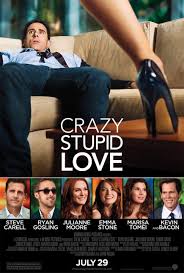
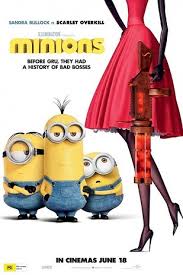
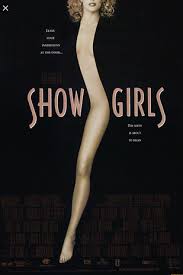
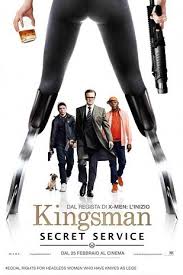
A form of the male gaze is even present in movie posters:
Image result for sexism in movie postersImage result for sexism in movie posters


Image result for sexism in movie postersImage result for sexism in movie posters


Many women in movie posters are depicted as headless- or faceless- beings.

Comedian and writer Marcia Belsky started up a project on Tumblr called The Headless Women Project in which she invites users to send movie posters depicting female bodies without a head.


"The Headless Women project seeks to bring attention to the still standard practise of fragmenting, fetishizing and dehumanising the images of women we see in film, TV, book covers, and advertisement."               

  "By decapitating the woman, she becomes an unquestionably passive object to the male gaze."                                                                                                                                             

  "The question of her consent is removed completely alongside her head, and her purpose becomes solely that of being looked at by men obediently."

Stereotypes of Women in Film 


Just like Paul Hunt's disability stereotypes, there are many stereotypes of women that are being shown in film repeatedly. These include:

Catty- One woman cannot be friends or work with another woman without being jealous and saying spiteful comments (especially over a man).

Maternal- All women want to do is have babies and a big family. Many woman are shown without a clear occupation whilst the men go and work in important jobs.

Stupid- Women cannot be intelligent and good looking. Most women are portrayed as less intelligent and easily confused who need men to come and solve their problems.

Weak- Women are the inferior sex when it comes to strength so obviously cannot defend themselves. They need  a man to come and rescue them.

Portrayals of women are becoming more progressive. When women are made lead characters they are normally presented as strong and independent with less being focused on their family life and more on their job e.g. Arrival, Rogue One, The Hunger Games. Many successful films also have all female casts e.g. The Help, Pitch Perfect, Hidden Figures.

My group having a female lead in our opening is a big deal which means we will need to be careful not to conform to stereotypes which would make it a regressive piece.


Monday, 5 December 2016

Directors

Directors Of The Drama-Thriller Genre


Alfred Hitchcock


Image result for alfred hitchcockSir Alfred Joseph Hitchcock KBE was an English film director and producer, at times referred to as "The Master of Suspense". He pioneered many elements of the suspense and psychological thriller genres. Some of his best-known films include; Psycho (1960), Vertigo (1958) and North By Northwest (1959).In order to create suspense in his films, he would alternate between different shots to extend cinematic time(the crop-duster sequence in North By Northwest (1959), the shower scene in Psycho (1960)). His driving sequences were also shot in this particular way. They would typically alternate between the character's point of view while driving and a close-up shot of those inside the car from the opposite direction. This technique kept the viewer 'inside' the car and made any danger more richly felt.In a lot of films, he used to create more shadows on the walls to create suspense and tension ( the glowing milk scene in Suspicion (1941) or the ominous shadow during the opening credits to Saboteur (1942)).


Stanley Kubrick


Image result for stanley kubrickStanley Kubrick was an American film director, screenwriter, producer, cinematographer, editor, and photographer. He is frequently cited as one of the greatest and most influential directors in cinematic history. The Shining (1980), A Clockwork Orange (1971) and 2001: A Space Odyssey (1968) are some of his most famous works. One of his signature shots was "The Glare". A character's emotional breakdown is depicted by a close-up shot of the actor with their head tilted down, but with their eyes looking up usually directly into the camera. Examples include the opening shot of Alex in A Clockwork Orange (1971), Jack slowly losing his mind in The Shining (1980), Pyle going mad in Full Metal Jacket (1987). Kubrick also often uses contrapuntal music to work against the on-screen images to create a sense of irony. In Dr Strangelove (1964), images of nuclear holocaust are accompanied by the song "We'll Meet Again" and in the final scene of Full Metal Jacket (1987) the marines sing the theme to "The Mickey Mouse Club".


Christopher Nolan


Image result for christopher nolanChristopher Nolan is an English-American film director, screenwriter, producer, cinematographer and editor. He is one of the highest-grossing directors in history, and among the most successful and acclaimed filmmakers of the 21st century. Some of his best-known films include; The Dark Knight Trilogy (2005-12), Inception (2010) and Memento (2000). What Nolan is probably best known for is that he doesn’t tell his stories linearly (with scenes in chronological order). He makes extensive use of flashbacks and flashforwards to add additional depth and explanation. As such, a common theme is having multiple story threads that link together. For example in Memento (2000) the opening sequence is the last scene played backwards, in The Prestige (2006), the first scene in the film is also the last one. Nolan also frequently uses crosscutting in his films. He crosscuts parallel scenes of action increase tension and build to a climax. Examples of some of his films that include crosscutting are Inception (2010) and The Dark Knight (2008).


Thursday, 1 December 2016

Drama-Thriller Iconography


Drama-Thriller Iconography

As our film opening is part of the drama/thriller genre it is important for us to look into specific details of what makes part of this genre. Some drama/thriller iconography include:


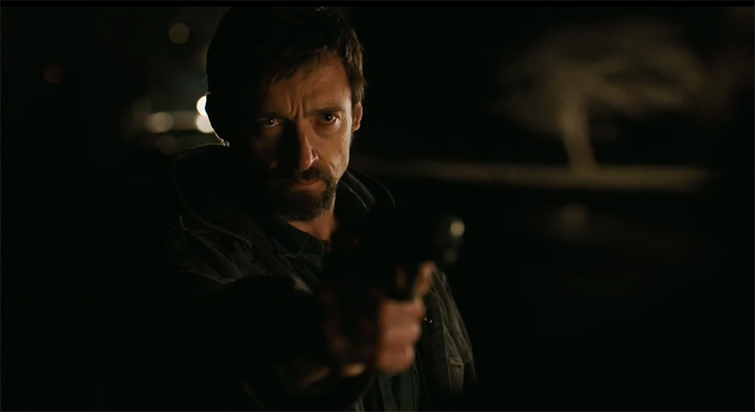
Low-Key Lighting

Image result for low key lighting film
In thrillers, low-key lighting is used mainly to depict a sense of danger and uncertainty as well as making a setting look more unsettling and disturbing for the audience. As well as this, a lot of films use low-key lighting where it only shows one side of a characters face. This is usually used to make the audience feel disturbed by the character but it can also hint to the audience that there is something hidden about the character and that there is more to them than what meets the eye.


Image result for 127 hours

Confined Spaces/Claustrophobia

In thriller films, confined spaces are used a lot to scare the audience and also to give the idea of insecurity to an audience member which should make them feel very uncomfortable when watching the film. This is because any phobia ia aimed to tackle an audience member's insecurity of something they dread.


Image result for alfred hitchcock glowing milkShadows

Shadows are frequently used and whilst they link closely to low-key lighting, they can also depict a sense of danger and peril to the story. As a result of this, the audience can feel very scared when they see one as they can try to anticipate what will happen next.


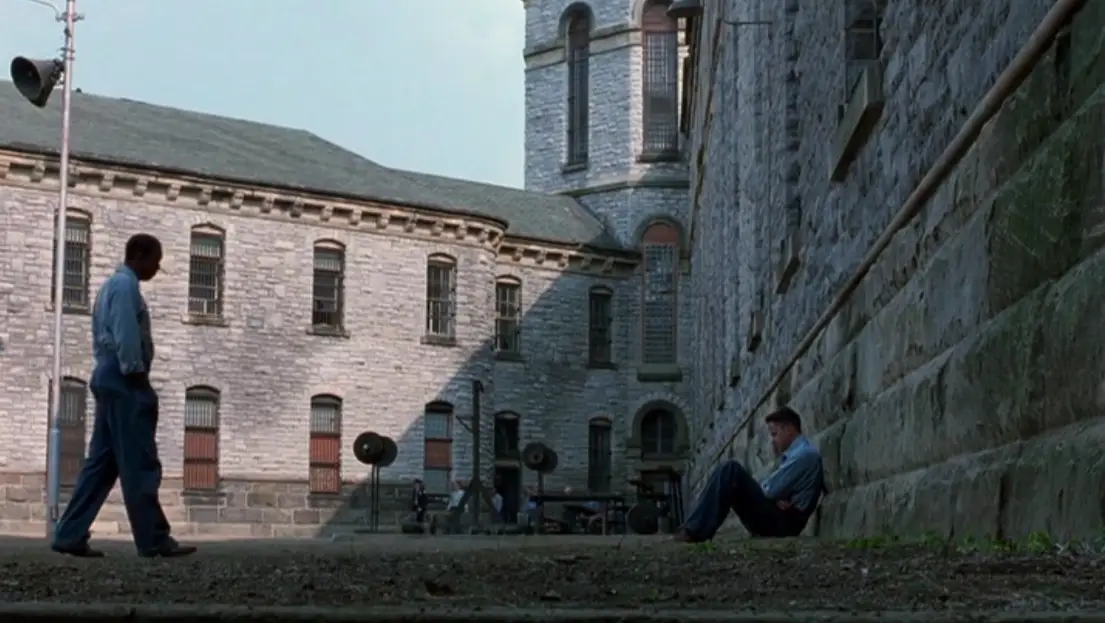
Reality

Image result for shawshank redemption prisonReality is a big piece of iconography in a drama genre, the audience have to be able to relate to the situation or be able to put themselves in that situation. This then allows for the audience to have a closer connection to the characters and start to feel things like sympathy for certain people. As a result of this, films have to be able to put reality into their films otherwise the audience will not relate to the film.